Monday, 18 May 2009

Album of the Week: 'Boy In Da Corner'


Maybe I'm the kind of politically correct man that haunts the dreams of Richard Littlejohn, but I can't help seeing racism in places that you wouldn't expect to find it. Prime among these is the racism in the field of music writing and appreciation. The tradition of 'black' music is exactly as creative and proficient, and dull and deficient, as 'white' music, but Cecil Taylor isn't mentioned in the same breath as Olivier Messiaen, and, somehow, Charlie Mingus is shamefully denied the title of the King of Music. When it comes to rap, the combination of insult and ignorance is shameful. Although music writing has gradually accepted that rap is worthwhile, Public Enemy's Bomb Squad aren't regarded by most geeks to be the equivilents of Autechre and Stockhausen that they are. And Dizzee Rascal, the greatest living British composer, is wheeled out like some exotic curio on Jonathan Ross.

The Rascal's first album, 'Boy In Da Corner', released in the year he turned 18, is an absurdly dense, challenging work. Alternately poppy and nightmarish, always tense and angry, it reaches the heights of Public Enemy, but manages to be witter and more engaging. Also, it's just more radical - the spaces that Dizzee is prepared to create would give Dr. Dre a heart attack. 'I Luv U' punches the listener with disgusting music and cutting lyrics about a teen pregnancy, and has the rare distinction of being an overtly misogynist song which gives the female race a right to reply. The spat claim "That girl's some bitch you know" is met with a biting "That boy's some prick you know". The brilliant, sparse 'Cut 'Em Off' takes the skittering beats of UK Garage, places them in a giant echoic room, and slows them to the pace of a dying heartbeat, providing the ideal backdrop for his coherent whinging.

Like another great rap innovator, Eminem, Dizzee subverts the traditional content of rap lyrics. 'Cut 'Em Off' and 'Round We Go' take the boasts of criminality and virility that make up most rap lyrics, and render them as whines. 'Cut 'Em Off''s chorus of "Socialise - negotiate" is wrapped in numerous voices, slapping into each other, mocking the competition of the 'Game' so beloved of ghetto folklorists. Just in case we missed the point, the song ends with a muttered, lonely instance of the word 'cunt'. 'Round We Go', while it features some truly ill-judged boasts (try to remember that "bend her over and I leave her limpin'" are the words of an 18-year-old), has a chorus refrain "ain't no love thing here - it's just one big cycle here", delivered in a tone that sounds remarkably like crying.

No wonder it won the Mercury Prize. Artists this inventive are very few and far between, and Rascal's demonstrated his flexibility by moving from the hard, abrasive style of 'Boy In Da Corner' to being one of Britain's most inventive pop stylists. Long may he make his thrillingly mental music

Thursday, 7 May 2009

On Positive Thinking


In one of Peep Show's many pithy, quotable lines, Super Hans outlines his basic views on humanity. "People", he says "like Coldplay, and voted for the Nazis". If the universality of bad taste was a fact, Peep Show would have sunk like a stone after one series. But, given that the mass of people are often capable of telling shit apart from dirty clay, it's one of Channel 4's most popular shows.

It's also the best sitcom of the last ten years, and one of the best British sitcoms of all time. At the heart of its success is the writing. Unremittingly bleak, profoundly well observed, with its unique device of having access to the darkest thoughts of the protagonists ("I wonder if I'm capable of murder?"), it often resembles a play by Brecht or Sartre. Except the jokes are better. One scene involves Jeremy, the self-obsessed air-headed poseur declaring that "Honey Nut Cornflakes are just Frosties for wankers", to which the downtrodden, middle-management nothing Mark replies "Well, Frosties are just Cornflakes for people who can't handle reality". An infinite number of monkeys with an infinite number of typewriters could maybe write Shakespeare, but they could never sum up characters through their choice of breakfast cereal with such skill.

Mark and Jeremy (and their ever-present internal monologues) aside, Peep Show has a beautifully drawn characters. Prime among these is the grotesquely thrusting and high-powered Johnson, the kind of black man that David Cameron has wet dreams about, but also deserving mention is the Christian hedonist Nancy (seen here as Sally, the most beautiful girl in the room) and Mark's frumpy yet cute ex-wife, Sophie. The focus given to the perspective of the two main characters allows the characters to fully develop and emerge, as rarely happens in conventional sitcoms, with multiple stories and a third person viewpoint. I know that Johnson and Mark share a taste for The Lighthouse Family because I've been in Johnson's car, and heard what's on Mark's iPod. With this level of detail, Peep Show makes other sitcoms look artificial - the cast of Friends and Coupling seem to live in a world without music, unless you count Pheobe's ten second punchline songs.

So far, so gushing. But the ultimate reason for Peep Show's success is its relentless realism, and the grimness that actually follows. Before the Credit Crunch, when Gordon Brown's skill at maintaining economic growth seemed almost magical, Jeremy was arguing that in the new economic climate "we don't make tractors out of pig iron any more - we chill out, fuck around on the Playstation...", while Mark, the hero of Peep Show, was reminding us of the need to "log in, and grind out" and that you can't, in fact "make money by drinking margharitas through a curly straw". The constant defeat of the main characters fits with lived experience, as opposed to the absurd, workless lives and surreal happy ending of Friends.

Peep Show has many admirers, but it has a core of fans - people who have been over-educated due to the massive expansion of higher education, and understimulated in work because of the subsequent glut of graduates in the labour market. The twin fates of Mark, in his soulless data entry job ("I can pretend I'm entering data for MI5...") and Jeremy, a 'creative' who can find no post in the 'knowledge economy' ("I'm dangerously bored") chime with millions. The continued success and resonance of Peep Show are proof of the power of negative thinking, and the hilarity of hearing the truths that we dare not admit to ourselves simply stated.

Monday, 4 May 2009

Album of the Week: 'Radiator'


Brit-pop is dead - most of its stars are no longer musicians. In fact, most of those who are still producing music are no longer musicians in any meaningful sense, Oasis being a CBBC version of The Rolling Stones and Damon Alburn being a wide-ranging credibility vampire with Tony Allen and Dangermouse as his quarries. Neither as politically radical nor musically radical as punk, there's a tendancy to write it out of history, and to accept the clip-show version of its history as fact - Liam Gallagher at Knebworth, 'Roll With It' vs 'Country House', Geri Spice's Union Jack dress, and, to mark its death, Tony Blair schmoozing the ambassadors of Cool Britannia like only a groupie can.

Of course, this is bollocks - Brit-pop produced many great songs (I may have been of an impressionable age, but watching Top of the Pops from 1994-1997 was a profound, gleaming thrill - remember Top of the Pops when you were a kid?) and bore aloft various bands that still produce great music to this day. Some kind of cosmic balance ensured that for every Shed Seven there was a Radiohead, for every Menswear there was a Pulp and for every Dodgy there was a Super Furry Animals.

Unlike Pulp or Radiohead, the Super Furries were clearly of Brit-pop. Bankrolled by Creation Records' Oasis-gotten millions, with jangling guitars and sunglasses/haircut combinations trademarked by Ian Brown, they were ideally suited to creating uplifting summer hits. But, regardless of their physical and spiritual proximity to the tenets of Brit-pop, the music they made was simply too divergent and odd.

Radiator, their second album, while it contains anthemic and pensive songs, full of sweeping guitar chords, and singalong melodies, also contains absurd fitful sketches, slightly over 2 minutes in length, called things like 'The International Language of Screaming'. Actually, even if we disregard the wilfully awkward pieces of music - the little keyboard pieces, the song in Welsh - even the 'hits' are difficult. 'Demons', with its sense of purpose and sweeping chords, has one of the most abrasive guitar tones in the history of recorded music, and the lyric "and in the year three million/our skins will be vermillion". 'Mountain People' asks you to digest, along with its singalong melody, a perpetually stretching verse and, to finish, a wall of electronic noise. These were not songs made for 'I Love The 90s'.

This is bad enough faced with the button-down style of Oasis and their friends, and the even more straight-laced members of the sub-group 'Cool Cymru'. But, the Supreme Crime of the 1990s Furries was their adherence to a non-personal lyric style. So 'The Placid Casual', as well as having the gloriously memorable chorus-marker "Fuzz/Clogs up my video", has a second verse about an unsuccessful coup in Sierra Leone. 'Mountain People' could be a eulogy for any number of culturally distinct mountain folk - the Kurds, the Chechens or, at a push, the Welsh - and heavily implies conflict - "two short blasts followed by one longer blast". The two love songs of sorts come laden with irony and history. "Hermann Loves Pauline" tells the story of a love affair between two socially odd people, in the third person, throwing in absurd references to Che Guevara, Marie Curie and 24-hour combination petrol stations and supermarkets. "She's Got Spies" does what it says on the tin, imagining a relationship destroyed by the interpersonal secret services of mistrust, eventually collapsing under its own tension. This is Brit-pop bent by history, an imaginary Oasis where one of the Gallaghers has read a book.

As such it was ignored. But like the other square-peg Britpop bands - Pulp, Manic Street Preachers, Radiohead - history has been kind to the Furries, and they continue to record challenging, witty music, long after Tony Blair committed some war crimes and Geri Halliwell became a UN Goodwill Ambassador.

Monday, 27 April 2009

Budgeting for the past: The Hauntology of Labour

Given the scale and profile of the current recession, the recent budget, traditionally the most trying of times for commentators (a great deal of numbers and infinitesimal changes in the price of fags do not a good 'angle' make) has become a goldmine for the boosters and gravediggers of 'New' Labour. The Guardian's Polly Toynbee alternates, with alarming frequency, between these two positions, but for a swift kick up the arse to the government, hers, with its close detail and wounded tone, is one of the best. In general, the conclusion drawn by commentators of the soft left and right is that the increase in tax for people earning over £150,000 a year is the death of 'New' Labour, given that not increasing tax on the rich was one of its key policy positions.

The tax raise is tiny, and largely symbolic. Labour has lost its funding from the very rich, as the hyper-rich now see Labour as an unsafe investment. As a result, 95% of its current funding comes from the trade unions, and with wage freezes/cuts and job losses clearly on the cards for the public sector, increasing tax a fraction on 1.5% of the population is considerably easier way to curry left favour than, well, raising wages and creating jobs. This symbolic murder of 'New' Labour is also an attempt to re-create the 'Brown bounce', when horror at the style of government of Tony Blair led people to hallucinate that Gordon Brown was authetically 'Old' Labour. The political problems of this are compounded by the fact that any hope in Brown as 'Old' Labour are an hallucination of 'Old' Labour as being a model of social democratic government.
If we take an actual appraisal of the last Labour government of 1974-1979, rather than a thumbnail one (beer and sandwiches, unions running the country, ill-fitting suits and regional accents), Brown is inarguably 'Old' Labour. Wage freezes, spiralling unemployment, global economic crisis - all very retro. The major discontinuity is the fact that, way back when, Labour hadn't dragged us into two absurd and disgustingly bloody wars. Brown has spent considerably less than fuck all on protecting jobs and wages, trillions on bankers and this is a 'left budget'?

Margaret Thatcher said her greatest achievement was 'New' Labour - undoubtably that is the case. But just as true is the fact that the greatest achievement of the pre-Thatcher Labour government was to soften the unions through collective bargaining, legal restriction and the argument that the unions should accept cuts in the 'national interest'. Maybe history the legacy of 'New' Labour will be to have killed, or at least critically wounded, the idea that Labour works for the working class. Sparks of resistance to the notion that the crisis is above and beyond control (we regret to inform you that we have to let you go) are burning. Let's hope Labour have lost the power to snuff them out.

Thursday, 23 April 2009

Album of the Week: 'Grrr'


One of the stupidest ever aphorisms is "don't judge a book by its cover". You only have to look at the cover of say, 'Articles of Faith' by Russell Brand to know it's going to be a lot of cobbled together, self-obsessed shite. Albums covers are the same. An album covered with a picture of members of a band, soberly dressed, staring in various directions, will generally be directionless and plodding. However, an album with a cover like that above, can only be good. It has a trumpet, and a fucking LION!! (Cub).

So I bought it. It didn't disappoint. By the radical anti-aparthied South African (lion) trumpeter (trumpet) Hugh Masekela, it's constantly sunny, and a reminder of a tradition different to the dour blues funk of most feted African artists - Fela Kuti springs to mind. Partly out of necessity (Masekela was exiled in the US for his opposition to aparthied), it mixes traditional African rhythm with more conventional jazz musicality. If North American music is Europe saying "hello" to Africa, what Masekela provides us with is Africa saying hello to a mixture of Europe and Africa.

So far, so nice. But where the 'Grrr' of the title comes in is with Masekela's trumpet playing. Absurdly overblown, the notes bend, warp and growl, providing a childish thrill - sometimes it resembles that most comic of instruments, the trombone. Of course, being a trumpeter, Masekela, can't ramble like Fela Kuti about the injustices done by his government, but the vehemence of his playing leaves us in no doubt that he's absolutely furious.

Friday, 17 April 2009

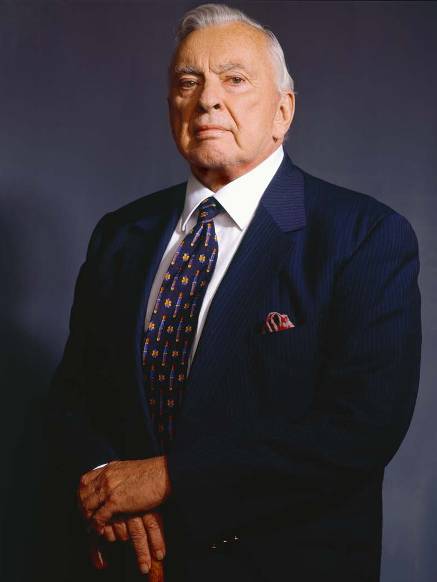
Approaching Gore Vidal: Part 2, 'Selected Writings'


Gore Vidal's politics are probably the most intriguing thing about the man. An odd kind of Democrat, he has vehemently opposed America's intervention in all wars including WWII, correctly regards the US an empire, and believes in the legalisation of all drugs. When his personal life is factored in, it is impossible to believe that he was a friend of the Kennedys and Clintons, and a congressional candidate. But, class counts in the States, despite the lunatic pronouncements of pro-Americans on the subject of the American Dream, which is, and has always been a dream.

'Selected Writings', never less than entertaining, collects Gore's writings on books and politics, largely sidestepping Gore's name-dropping, aristocratic side. Of course, these are more than one side of the man (probably nearer 2/3rds), and they creep in - an eyewitness account of 50s Egypt is by turns a travelogue of the kind popularised (?) by Michael Winner and a breathtakingly detailed exposition of superpower rivalry, coming to the then radical conclusion that money, not politics, was the determining factor. A brilliant, before-its-time (1981!) attack on the homophobia and racism of one of the original neo-cons, Norman Podhoretz, 'Pink Triangle and Yellow Star' (exerpt here), is marred by Vidal's compulsion to mock Podhoretz and his wife, Midge Decter, for being nouveau riche, of 'the new class' - not Mayflower originals like the Grand Old Gores.

Vidal's radicalism is absurdly wide-ranging, ranging from attacks on what he calls The Family to ending an essay on 9/11 with a simple, and gigantic, table of US interventions in the 10 years preceeding the attacks. In the same essay, the pre-9/11 Bush is compared to Hitler. Reading Gore's more recent work, the motivation behind his surreal election night face-off with David Dimbleby becomes blindingly clear.

Vidal has bitten off a large chunk of extreme libertarian thought - during the Clinton years, he famously associated with the survivalist convicted of the Oklahoma Bombings. He therefore expresses his anti-imperialism in the tones of one who accepts the Israel Lobby thesis, with touches of New World Order 'theory'. Added to this a fierce (and inexplicable) support for the Democrats, Bush became, to Gore, a fascist dictator, clamping down on dissent, launching criminal wars. While Bush undoubtably did this, Gore saw Bush and the Republican party as cancers on America, and not a logical outgrowth. When the Republicans were defeated at the polls, all the totalitarianism that had been determined by Gore - the theft of the 2000/2004 elections by Republican 'criminals' vanished into smoke. A fascist party that gets peacefully replaced by its rivals, isn't a fascist party.

Wednesday, 15 April 2009

Album of the Week: 'Armed Forces'


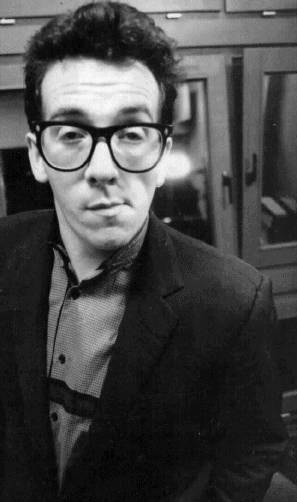
Elvis Costello is perhaps the most respected songwriter to emerge from the punk era - a status he has achieved by spending the last 15 years or so behaving like an apprentice Paul McCartney. He has recorded albums with string quartets and Allen Toussaint, written orchestral music and, most recently, acted like King Music on his good but grating 'chat show' Spectacle. Much of his more recent work has involved carefully rounding off the razor-sharp edge that his music previously had, and re-presenting himself as an all too conscious 'musician'. He is not, however much he may like to think he is, a middle-of-the-road tunesmith - his music is not made for wedding receptions. Costello famously remarked, around the time of the release of his first 3 albums, that he was capable of two emotions - guilt, and revenge. 'Armed Forces' deals with these, brutally and relentlessly.

One reason 'Armed Forces' stands apart from the other early Elvis albums, is hinted at in its title, and blugeoned home in the thankfully discarded provisional title, 'Emotional Fascism'. As well as referring to snatches of broken, destructive relationships, the ghosts of World War Two and the stasis of the social contract that emerged following are pressed into service. In perhaps the album's weakest track, 'Chemistry Class' - a poor, disjointed song of obsessive love and heartbreak - the chorus runs "Are you ready for the final solution?". Fortunately, this disgrace is a rare blip - the interplay between the political and personal is more stylishly done in the glittering 'Oliver's Army', which draws a parallel between the drunken rambling of an old soldier and the decline of the British Empire. The political extremity of the coming Thatcher revolution and the rise of the NF is dealt with in the itchy, fearful 'Green Shirt' and the fabulous 'Sunday's Best', which imagines a particular British seaside fascism of "Songs of Praise and Reader's Wives", where natives "beat up strangers who talk funny - take their greasy, foreign money".

Of course, this all sounds rather worthy, which is where the other half of the album's content comes into play. During the recording of 'Armed Forces', Costello is on record as having been under the influence of Abba. Unlike the dry, clattering, Americanised rock of 'My Aim Is True' and 'This Year's Model', 'Armed Forces' is a lush, harmonied and synthesisered work. This explains the enduring status of 'Oliver's Army' and 'Accidents Will Happen' as his most recognizable songs. It also acts as a glorious counterpoint to the grime and sweat of the subject matter - the peppy sequencing and cut glass chords of 'Green Shirt' makes lyrical punches like "better cut off all identifying labels/before they put you on the torture table" easier to weather. The grand horror of the lyrics next to the horror of the subject matter fits into the famous 'Peep Show' framework of brown toast for dinner, and white toast for dessert. The joke is on him, because I actually love brown toast.